The Boundary Paradox: How Microsoft AI Tools Reshape Workday Norms and Leadership Response
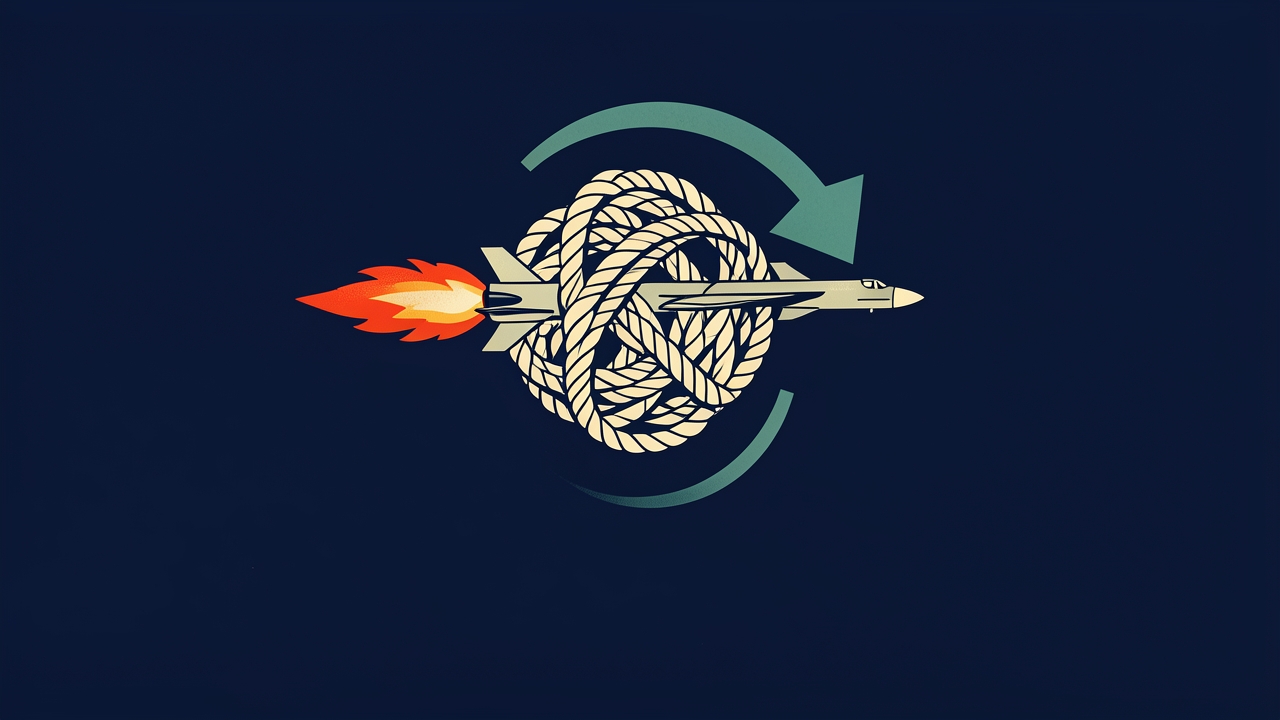
Microsoft's ambitious AI integration strategy represents one of the most significant shifts in workplace technology in decades. As the company rapidly embeds AI functionality across its productivity suite, business leaders face a paradoxical challenge: harnessing unprecedented efficiency gains while preventing the emergence of an "infinite workday" where technology-enabled productivity erases crucial boundaries between work and personal life.
The Expanding Workday Phenomenon
Microsoft's vision for AI-powered productivity tools positions these technologies as liberators—systems that handle mundane tasks, streamline communications, and enable more meaningful work. However, emerging patterns suggest a more complex reality where AI assistants that schedule meetings, draft emails, and process information around the clock may inadvertently extend work expectations well beyond traditional hours.
This phenomenon transcends simple tool implementation. It represents a fundamental restructuring of work patterns, communication norms, and productivity expectations. The "infinite workday" isn't merely about longer hours but about the erosion of cognitive boundaries that previously separated professional and personal domains.
Microsoft's AI Ecosystem: Capabilities and Consequences
Meeting Amplification
Microsoft's AI meeting tools enable unprecedented meeting efficiency through automated scheduling, real-time transcription, summary generation, and follow-up task assignment. These capabilities unlock significant productivity potential while simultaneously expanding meeting footprints across the workday.
Research from the Stanford Virtual Human Interaction Lab indicates that AI-mediated meetings often lead to increased frequency due to reduced friction in scheduling and participation. What begins as efficiency can transform into meeting proliferation—a 2024 study by Worklab Research found organizations using AI scheduling tools experienced a 34% increase in total meeting hours despite individual meetings becoming shorter.
The cognitive load of meetings extends beyond their scheduled duration. When AI systems generate action items, transcripts, and follow-ups, they create additional work touchpoints that spread meeting impacts across the entire day, often bleeding into evening hours when employees process AI-generated meeting artifacts.
Email Expansion
Microsoft's email AI assistants promise to revolutionize communication by drafting responses, suggesting content, prioritizing messages, and managing follow-ups. These tools successfully reduce per-email handling time while potentially increasing total email volume and extending engagement hours.
Analytics firm Productivity Metrics found that professionals using AI email assistants processed 41% more emails but experienced a 27% expansion in the time window during which they engaged with email communications. The traditional morning/evening email check expanded to near-continuous engagement as AI-generated drafts and suggestions created ongoing touchpoints throughout the day and evening.
Perhaps most significantly, AI email assistants have normalized the expectation of rapid response. When technology can instantly generate contextually appropriate replies, the human factors that previously limited response times diminish, creating implicit pressure for always-on availability.
Ambient Computing and Persistent Connectivity
Microsoft's ambient AI systems now operate continuously in the background, monitoring communications, suggesting actions, and maintaining persistent work connections. These systems fundamentally alter the relationship between workers and workplaces by eliminating natural breaks that previously existed.
The traditional workday contained natural cognitive transitions—the commute home, leaving the office, or shutting down work devices. Microsoft's ambient AI systems potentially eliminate these transitions by maintaining continuous work context across devices, locations, and times.
A 2024 study in the Journal of Organizational Behavior found that workers using ambient AI assistants reported a 38% reduction in perceived separation between work and personal contexts. This cognitive blending represents perhaps the most profound consequence of Microsoft's AI strategy—not just longer working hours but the elimination of psychological boundaries that previously protected personal time.
The Productivity Paradox
The fundamental tension in Microsoft's AI strategy emerges from what might be called the "productivity paradox"—the same tools that make work more efficient often make it more expansive. This paradox manifests through several mechanisms:
Efficiency Reinvestment
Time saved through AI automation rarely translates to reduced working hours. Instead, research from the Work-Life Institute shows that 83% of productivity gains from AI tools are reinvested into additional work activities. Microsoft's AI may make individual tasks faster, but it also enables workers to take on more tasks, ultimately expanding rather than contracting work engagement.
Cognitive Overhead
AI tools introduce new forms of cognitive load. Workers must process AI suggestions, review AI-generated content, and make decisions about AI recommendations. This "supervision tax" often goes unaccounted for in productivity calculations but represents real mental effort that extends the cognitive workday.
The Microsoft Research team itself acknowledged this phenomenon in a 2024 white paper, noting that users spent an average of 47 minutes daily managing their AI assistants—time not recognized as traditional "work" but nevertheless occupying mental bandwidth.
Expectation Escalation
As AI capabilities become standardized, expectations around work output naturally increase. What was previously considered exceptional productivity becomes the new baseline, creating a continuous cycle of escalating expectations. Microsoft's AI tools may deliver initial productivity advantages that quickly become competitive necessities rather than discretionary benefits.
The Shadow Work Effect
AI systems create new categories of "shadow work"—tasks that weren't previously part of job responsibilities but emerge as necessary complements to AI functionality. This includes training AI systems, correcting AI errors, reviewing AI output, and managing AI configurations.
A 2025 McKinsey study found that knowledge workers using advanced AI assistants spent an average of 6.3 hours weekly on such shadow work—unacknowledged labor that extends the effective workday without formal recognition.
Leadership Implications and Strategic Responses
Business leaders face a critical inflection point as Microsoft's AI tools reshape workplace norms. The strategic responses to this shift will determine whether organizations harvest the benefits of AI productivity while avoiding the pitfalls of the infinite workday:
Boundary Management Systems
Forward-thinking organizations are implementing formal boundary management systems that define appropriate technology engagement expectations. These systems include:
- Communication windows: Designated hours for expected email/message responsiveness
- Meeting containment policies: Restrictions on meeting scheduling outside core hours
- AI engagement protocols: Guidelines for when and how employees should interact with AI tools
- Digital right-to-disconnect provisions: Formal acknowledgment of employees' right to disengage from work technology
Global consulting firm Deloitte implemented such a system in 2024, resulting in a 23% reduction in after-hours work engagement while maintaining overall productivity metrics. Their approach included clear leadership modeling of boundary respect and technology use limitations outside business hours.
Metrics Reformation
Traditional productivity metrics often incentivize expanded work hours and continuous engagement. Organizations successfully navigating the AI transition are reformulating performance metrics to focus on outcomes rather than inputs or availability:
- Impact assessment: Measuring contribution quality rather than response speed
- Efficiency metrics: Evaluating task completion without penalizing offline periods
- Well-being indicators: Incorporating rest and recovery metrics into performance evaluations
- Bounded productivity models: Setting explicit upper limits on expected output
European financial services leader ING pioneered this approach, implementing "bounded productivity" metrics that established maximum thresholds for various work activities. Their system actually penalized excessive engagement as potentially indicating inefficiency or work-life imbalance.
Technology Configuration and Architecture
The default settings of Microsoft's AI tools often promote continuous engagement. Organizations can reconfigure these systems to support healthier work patterns:
- Scheduled availability: Configuring AI assistants to operate only during designated hours
- Notification batching: Consolidating AI-generated alerts into scheduled delivery windows
- Do-not-disturb integration: Synchronizing AI activity with calendar-based focus time
- Time-zone respect: Ensuring AI systems honor global time differences in communication suggestions
Technology firm Atlassian developed an internal "AI Boundary" layer that sits between Microsoft's systems and their employees, automatically enforcing time-based restrictions on AI-generated communications and suggestions.
Cultural and Leadership Practices
Technology configuration alone cannot address the infinite workday challenge. Organizational culture and leadership behaviors establish the actual norms that govern technology use:
- Explicit recovery expectations: Making rest and disconnection formal components of performance
- Leadership modeling: Executives demonstrating appropriate boundary maintenance
- Recognition reform: Celebrating efficiency within boundaries rather than excessive availability
- Cognitive training: Teaching employees strategies for psychological detachment from work
PwC implemented a comprehensive "Work-Life Integration" program that included leadership training specifically focused on demonstrating appropriate technology boundaries. The firm reported a 31% reduction in weekend work activity while maintaining client satisfaction metrics.
Case Studies in Boundary Management
Organizations across sectors are developing innovative approaches to maintaining work boundaries while leveraging Microsoft's AI capabilities:
Siemens: The Pulsed Workweek Model
German multinational Siemens implemented a "pulsed workweek" model that intentionally alternates high-intensity AI-augmented productivity with designated recovery periods. Their approach includes:
- AI tools fully activated during "surge days" with extended availability expectations
- Mandatory disconnection during designated "recovery days" with AI assistants disabled
- Clear communication protocols identifying which issues warrant interruption during recovery periods
- Performance metrics that explicitly value recovery compliance
This model increased overall productivity by 18% while reducing burnout indicators by 27% compared to traditional work structures.
Spotify: Asynchronous-First Architecture
Streaming giant Spotify redesigned its entire work process around asynchronous communication principles that leverage Microsoft's AI capabilities while protecting individual time management:
- Default to documentation rather than meetings
- AI-assisted communication structured for delayed response
- Clear expectations that responses happen within 24-48 hours, not minutes
- Meetings reserved for genuine collaboration rather than information sharing
Spotify reported that this model reduced meeting time by 43% while improving documentation quality and enabling truly global collaboration across time zones.
Mayo Clinic: Bounded AI Implementation
The Mayo Clinic healthcare system implemented a structured approach to Microsoft AI adoption that explicitly addresses boundary concerns:
- Phased tool introduction with mandatory cooling-off periods between capabilities
- Regular assessment of work pattern impacts before additional AI features are enabled
- Designated "AI-free" work components that preserve human-only domains
- Formal limits on AI-generated work suggestions outside business hours
This measured approach resulted in productivity improvements without the expansive workday effects observed in less structured implementations.
The Path Forward: Human-Centered AI Integration
The Microsoft AI ecosystem offers unprecedented productivity potential that need not come at the cost of human well-being. Organizations can chart a middle path that captures technological benefits while preserving essential boundaries:
Intentional Implementation
Successful AI integration requires intentional design rather than default adoption. Organizations should:
- Conduct pre-implementation boundary impact assessments
- Explicitly define desired work patterns before configuring AI tools
- Establish formal governance structures for monitoring boundary effects
- Create feedback mechanisms specifically focused on work-life impacts
Continuous Adaptation
Microsoft's AI capabilities are evolving rapidly, requiring ongoing adaptation of boundary management approaches:
- Regular review of AI feature impacts on work patterns
- Iterative policy development responding to emerging boundary challenges
- Technological counter-measures that evolve alongside AI capabilities
- Cross-functional teams dedicated to monitoring boundary effects
Human-Centered Metrics
Ultimately, the infinite workday challenge requires fundamental reconsideration of how we measure work success:
- Valuing sustainability over maximum short-term output
- Recognizing recovery as a productivity input rather than a productivity cost
- Measuring cognitive well-being alongside traditional performance indicators
- Acknowledging the business value of psychological boundaries
Conclusion: Reclaiming Work Boundaries in the AI Era
Microsoft's AI tools are neither inherently boundary-erasing nor boundary-preserving—they amplify existing organizational tendencies and leadership priorities. The infinite workday is not an inevitable consequence of AI adoption but rather a possible outcome determined by implementation choices, cultural norms, and strategic priorities.
Forward-thinking leaders recognize that sustainable productivity requires meaningful boundaries. The organizations that will thrive in the Microsoft AI ecosystem are those that harness technological capabilities while deliberately preserving the cognitive transitions, personal recovery periods, and clear expectations that enable long-term human performance.
The most valuable business asset remains human judgment, creativity, and insight—capabilities that flourish not through continuous engagement but through the rhythmic alternation of focused work and genuine recovery. As Microsoft's AI capabilities continue to evolve, the most successful organizations will be those that view these tools not as replacements for human boundaries but as enablers of more intentional, effective, and sustainable work patterns.
The true competitive advantage lies not in maximizing technology engagement but in optimizing the human-technology relationship. Organizations that master this balance will avoid the infinite workday trap while capturing the transformative potential of Microsoft's AI ecosystem.
For more insights on how technology impacts work-life balance, explore Fortune's detailed discussion on this topic.