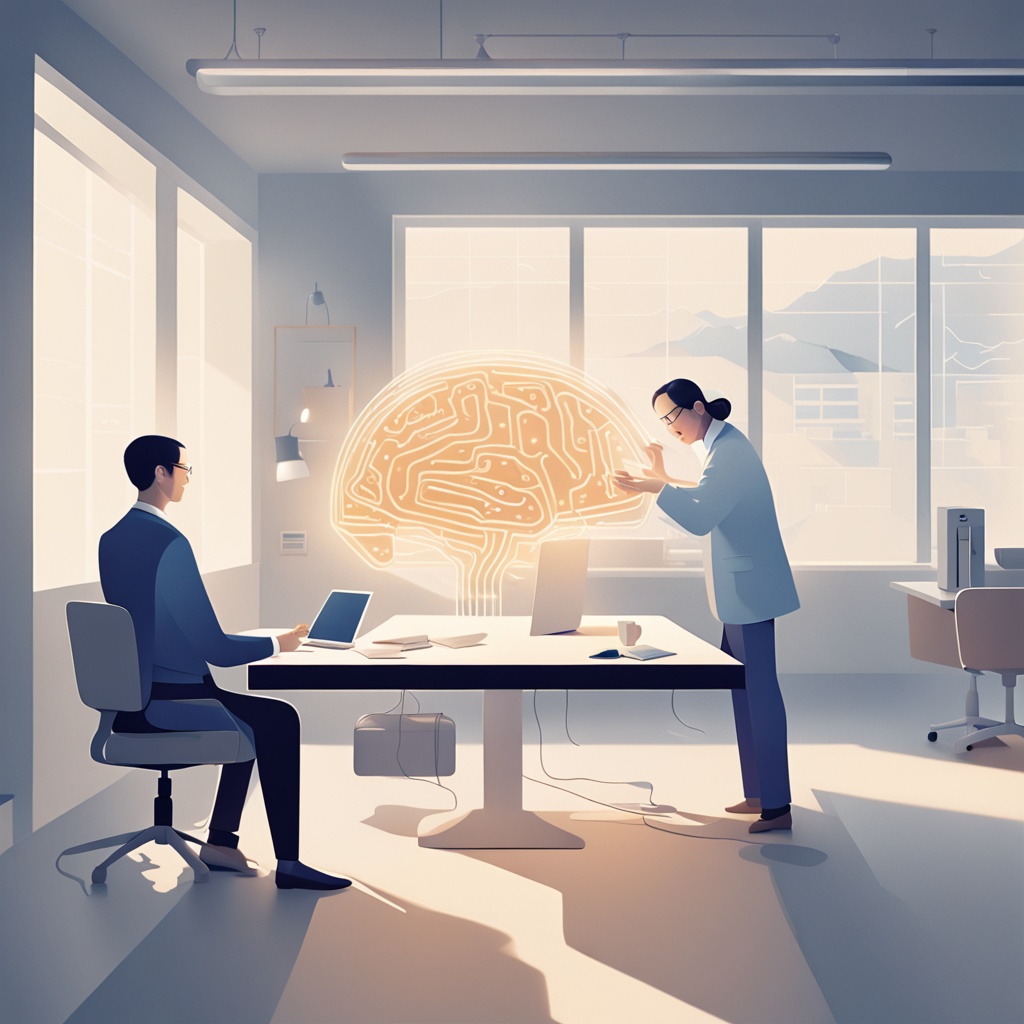
The Seductive Myth of AI Replacing Human Intuition
The business world has become obsessed with a seductive myth: that artificial intelligence can replace human intuition in innovation. Silicon Valley evangelists preach that with enough data and sophisticated algorithms, companies can bypass the messy, time-consuming work of understanding actual customers. Just feed the machine learning models, they argue, and let technology do the rest.
Bain & Company’s latest Innovation Report delivers a reality check that should give pause to any executive tempted by this AI-first approach. After surveying and interviewing firms from Fast Company’s 50 Most Innovative Companies, the consulting giant found that 89% of these industry leaders prioritize understanding customer needs over AI-driven shortcuts. Even more telling, 72% actively integrate direct user feedback and empathy-driven insights throughout their entire development process.
This data points to a fundamental truth that the tech industry often overlooks: innovation without human understanding is just expensive guesswork.
The False Promise of AI-First Innovation
The allure of AI-first innovation is understandable. Machine learning algorithms can process vast datasets, identify patterns across millions of data points, and generate insights at superhuman speed. Synthetic personas can simulate customer behaviors across dozens of market segments simultaneously. For time-pressed executives facing quarterly growth targets, the promise of automated innovation feels irresistible.
Yet this approach fundamentally misunderstands what drives successful innovation. Research from Harvard Business School professor Clayton Christensen, detailed in his seminal work "The Innovator’s Dilemma," demonstrates that breakthrough innovations rarely emerge from data analysis alone. Instead, they arise from deep understanding of customer jobs-to-be-done and unmet needs that quantitative analysis often misses.
Consider the cautionary tale of Google Plus, Google’s attempt to compete with Facebook. Despite having access to more user data than perhaps any company in history, Google’s AI-driven approach to social networking failed spectacularly. The platform launched in 2011 with great fanfare but never gained meaningful traction because it fundamentally misunderstood how people actually want to connect and share online. Google had the data but lacked the human insight to interpret what it meant.
Contrast this with Instagram’s origins. When Kevin Systrom and Mike Krieger launched the photo-sharing app, they didn’t rely on sophisticated AI analysis. Instead, they observed a simple human truth: people wanted to make their phone photos look as good as professional camera shots. This insight, derived from watching actual user behavior rather than analyzing data patterns, led to one of the most successful social media platforms in history.
The Synthetic Persona Trap
Bain’s research highlights both the promise and peril of synthetic personas, AI-generated user archetypes that can simulate human behaviors with remarkable sophistication. These digital doppelgangers offer genuine value by enabling rapid testing across multiple user segments and providing insights into hard-to-reach demographics.
However, synthetic personas suffer from fundamental limitations that make them poor substitutes for real human insight. They reflect probabilistic behavior based on historical data, potentially missing emotional nuances, cultural contexts, and emerging behavioral shifts that drive innovation opportunities. More dangerously, they can amplify biases embedded in their training data, leading companies to build products that serve algorithmic assumptions rather than actual human needs.
A study by MIT researchers Cathy O’Neil, detailed in "Weapons of Math Destruction," demonstrates how algorithmic bias can perpetuate and amplify human prejudices at scale. When companies rely too heavily on synthetic personas for innovation decisions, they risk building these same biases into their products and services.
The most sophisticated approach treats synthetic personas as hypothesis generators rather than truth tellers. They can quickly identify potential opportunities and user segments worth investigating, but these insights must be validated through direct human engagement before informing major innovation investments.
Where Human Insight Still Reigns Supreme
Bain’s research reveals that when innovative companies need to identify trends and crowdsource ideas, they overwhelmingly turn to human-centered approaches. Sixty-eight percent rely on customer needs-based analysis, while competitive analysis and monitoring of regulatory and societal trends also rank highly. By contrast, fewer than half use internal crowdsourcing or external open innovation platforms.
This preference for human-centered trend identification reflects a deeper truth about innovation: the most valuable insights often emerge from observing what customers do rather than analyzing what data suggests they might do. Ethnographic research, user interviews, and direct observation reveal contextual factors and emotional drivers that even the most sophisticated algorithms struggle to capture.
Airbnb’s success story illustrates this principle perfectly. The company’s founders didn’t discover their business model through data analysis. Instead, they lived with their early users, observing how people actually experienced home-sharing. They noticed that hosts cared deeply about the quality of listing photos and personally visited users to take professional photographs. This hands-on approach revealed insights about trust, community, and experience quality that no algorithm could have predicted.
Similarly, when Procter & Gamble developed the Swiffer cleaning system, the breakthrough came from anthropologist researchers spending time in customers’ homes, watching how people actually cleaned. They observed the frustration with traditional mops and the desire for more convenient cleaning solutions. This human-centered research approach led to one of P&G’s most successful product launches.
The Intelligent Integration Model
The most innovative companies are not choosing between AI and human insight but rather engineering intelligent integration of both approaches. They use AI to amplify human understanding rather than replace it, creating what we might call "empathy at scale."
Bain’s research identifies several areas where leading companies invest in AI-powered tools that enhance rather than eliminate human focus:
-
AI-assisted customer research and trend scouting accelerates the identification of patterns and opportunities that researchers can then investigate through direct human engagement.
-
Rapid prototyping and A/B testing enables teams to test more concepts with real users in shorter timeframes.
-
Automated low-value work frees researchers and designers to spend more time on high-value customer interaction.
This approach recognizes AI’s strength in processing scale and speed while preserving human advantages in interpretation, empathy, and contextual understanding. The result is innovation processes that are both more efficient and more accurate.
Netflix exemplifies this intelligent integration approach. The company uses sophisticated machine learning algorithms to analyze viewing patterns and preferences across its global user base. However, these algorithmic insights inform rather than replace human decision-making about content development and user experience design. Human teams interpret the data, conduct user research to understand the ‘why’ behind viewing behaviors, and make creative decisions about original programming that algorithms alone could never make.
Implementation Strategies for Leaders
For executives seeking to implement this balanced approach, several strategies emerge from Bain’s research and broader innovation literature:
-
Start with human insight, scale with AI. Use traditional research methods to develop deep understanding of customer needs, then deploy AI tools to test and validate insights across broader populations. This sequence ensures that technological capabilities serve human understanding rather than replacing it.
-
Invest in hybrid research capabilities. Build teams that combine traditional research skills with AI literacy. Researchers who understand both ethnographic methods and machine learning capabilities can more effectively integrate insights from both approaches.
-
Create rapid validation loops. Use AI tools to accelerate the testing and iteration of human-derived insights. This enables more frequent customer feedback cycles without sacrificing depth of understanding.
-
Maintain direct customer contact. Even as AI tools become more sophisticated, ensure that key decision-makers maintain regular direct contact with customers. This prevents the gradual abstraction that can occur when insights are filtered through multiple technological layers.
The Competitive Advantage of Human-Centered AI
Companies that successfully integrate AI with human insight gain significant competitive advantages over those that pursue either extreme. They can move faster than purely human-centered approaches while maintaining more accuracy than AI-first strategies.
This balanced approach becomes particularly valuable in uncertain market conditions. As economic volatility and technological change accelerate, the companies most likely to thrive are those that can quickly understand and respond to shifting human needs. Pure AI approaches may miss subtle changes in customer psychology and behavior, while purely human approaches may lack the speed and scale necessary to compete effectively.
Moreover, as AI capabilities become more widely available, sustainable competitive advantage will likely shift toward superior human insight rather than technological sophistication. Any company can license advanced AI tools, but developing deep customer empathy and cultural understanding requires organizational capabilities that are much harder to replicate.
Looking Forward
Bain’s research suggests we are entering a new phase of innovation where the winners will be those who most skillfully combine human intuition with artificial intelligence. This represents a maturation of both technological capabilities and management thinking about their optimal application.
The companies that will dominate the next decade of innovation are likely to be those that resist the false choice between human insight and artificial intelligence. Instead, they will build organizational capabilities that treat AI as an amplifier of human understanding rather than a replacement for it.
For business leaders, the imperative is clear: invest in AI tools that make your teams more empathetic and customer-focused, not less. The future belongs to companies that can combine the scale and speed of artificial intelligence with the depth and nuance of human insight. In an age of algorithmic everything, the most successful innovations will still be fundamentally, irreplaceably human.
The myth of self-driving innovation is just that: a myth. The reality is more complex but also more promising. By treating AI as a tool for scaling empathy rather than replacing it, companies can achieve both the efficiency gains that technology promises and the human connection that sustainable innovation requires. The most innovative companies already understand this truth. The question for other leaders is whether they will learn it before their competitors do.
To explore more about how human insights drive innovation in the AI era, visit Bain's detailed analysis.