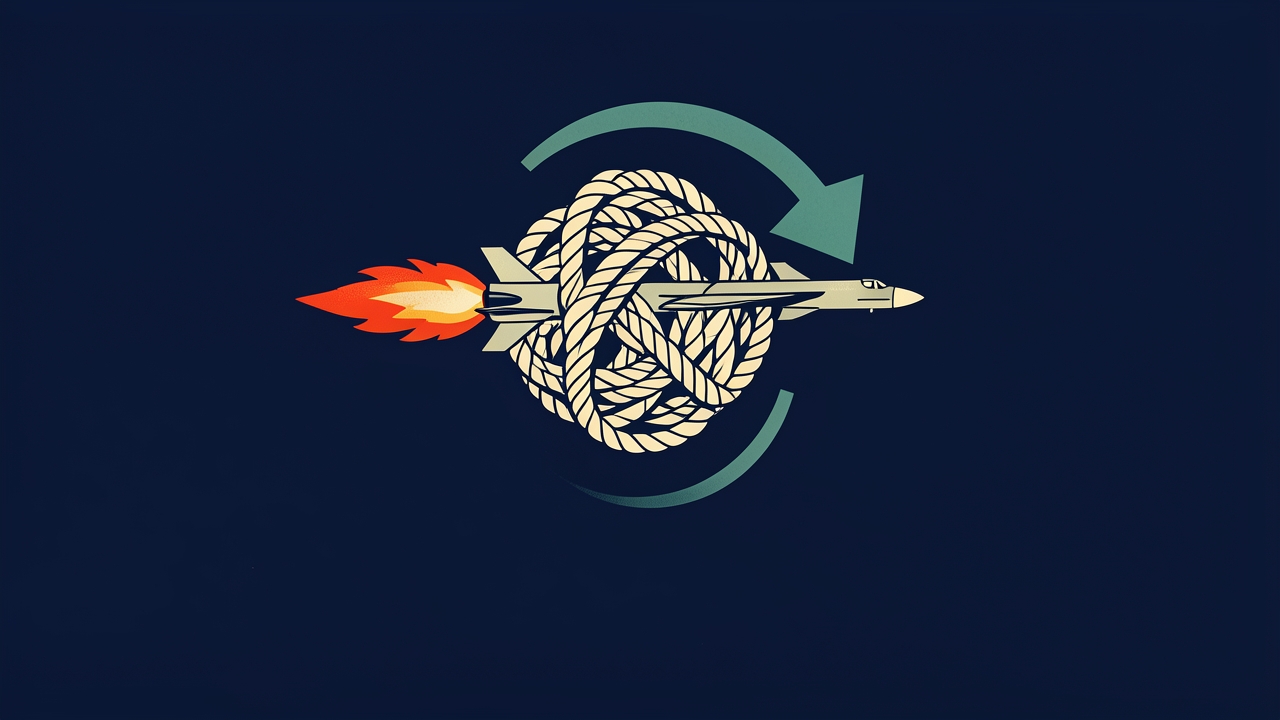
In the recent CIO interview with Nicola Dorling, Group CIO for Downer Group, we witness a masterclass in pragmatic digital transformation leadership. Dorling's approach at this 30,000-employee infrastructure services company offers valuable insights for technology leaders navigating the complex balance between legacy system management and forward-looking innovation.
What makes Dorling's perspective particularly noteworthy is her unusual path to the CIO role—coming from a CFO background rather than a traditional technology career track. This financial lens brings a refreshing clarity to how she measures technology success: not by technical sophistication but by business outcomes and customer value.
However, while Dorling's customer-focused transformation approach appears straightforward in principle, executing it effectively across a complex, multi-business organization requires sophisticated strategies that deserve deeper examination. Her interview highlights important practices, but also leaves critical questions unanswered about the inevitable tensions and tradeoffs in such a comprehensive transformation journey.
The Balancing Act: Legacy Systems and Innovation
At the core of Dorling's philosophy is a pragmatic acceptance of organizational reality: large, established companies like Downer inevitably accumulate legacy technologies that cannot simply be discarded. "There needs to be a balance," she notes. "You need to understand what legacy technology you've got, why you've got it, and how long you might need it for."
This balanced approach stands in contrast to more aggressive transformation philosophies that advocate wholesale replacement of legacy systems. Research supports Dorling's moderation. According to a Boston Consulting Group study, companies that successfully modernize their technology landscapes typically do so through strategic prioritization rather than "big bang" replacements. The study found that 78% of successful digital transformations involved selective modernization targeting high-value business capabilities rather than wholesale replacements.
However, this balanced stance requires discipline to prevent it from becoming an excuse for maintaining problematic legacy systems indefinitely. Dorling's comment that "once you start to get the foundations and the stack right, then when you want to focus on innovation or decommissioning legacy, it makes it easier" suggests a sequential approach. The risk here is that foundation-building can become endless, perpetually delaying genuine transformation.
A superior approach might combine stabilizing foundations with parallel innovation streams—something the interview doesn't explicitly address. Organizations like JP Morgan Chase have demonstrated success with parallel tracks: one team stabilizing core systems while another rapidly experiments with customer-facing innovations. This creates momentum while managing risk.
Customer Journeys as Transformation Blueprints
Dorling emphasizes that Downer's digital journey begins with understanding customer experiences: "We spend a lot of time assessing what the business does on a daily basis for customers. We map out all those journeys, and we understand if they have any pain points for our employees."
This customer-first approach represents best practice in digital transformation. Research from MIT's Center for Information Systems Research confirms that companies that take a customer journey perspective in their digital initiatives achieve 3-5% greater revenue growth than those focusing primarily on internal processes or technologies.
However, while customer journey mapping is essential, it's only effective when connected to organizational change capabilities. A 2022 PwC study found that 68% of companies conduct customer journey mapping, but only 23% successfully translate those insights into organizational changes. The interview doesn't detail how Downer bridges this execution gap—a critical aspect of transformation success.
Dorling briefly mentions having "heads of IT that report to me in each unit," suggesting a federated model that helps translate customer insights into business-unit-specific improvements. This organizational design choice warrants deeper examination, as it represents a deliberate tradeoff between centralized efficiency and business-unit responsiveness.
Data-Driven Decision Making: From Asset Information to Business Value
Dorling highlights how Downer leverages AI and historical data to predict asset conditions: "That helps organizations like ours predict what work orders need to be in the future, which helps us work with our customers on the demand planning of those work orders, and the supply planning of resources."
This application of predictive analytics represents a mature use of data that directly addresses customer needs. By predicting maintenance requirements, Downer helps clients optimize capital and operational expenditures—a clear business value proposition.
Dorling's example of Fault IQ—which applies AI to road maintenance—exemplifies her practical innovation approach: "In Downer Digital, we don't always need to build everything ourselves. We'll use something off the shelf if we can, and then configure it to our database of faults."
This build-versus-buy philosophy reflects a sophisticated understanding of where to invest development resources. Research from Gartner indicates that organizations with mature digital capabilities typically build only 20-30% of their technology solutions, focusing custom development on areas of unique competitive advantage.
However, this approach raises important questions about data integration across Downer's diverse business units. With "four business units and around 25 lines of business," creating a coherent data foundation presents significant challenges. While Dorling mentions "having one place to have all our data across all business units" as an aspiration, the interview doesn't address the governance and organizational changes required to achieve this.
Organizations that successfully create enterprise data assets typically implement federated data governance models that balance local control with enterprise standards. Companies like Schneider Electric have demonstrated how industrial service providers can create value through cross-business-unit data integration, but this requires dedicated governance structures not detailed in the interview.
Strategic Alignment: The Three-Pillar Approach
Dorling describes Downer's digital strategy as having "three overarching pillars and 12 strategic programs of work" that align with business unit strategies. This structured approach helps ensure that digital investments support strategic priorities rather than pursuing technology for its own sake.
This alignment method reflects a mature understanding of portfolio management. Research from MIT CISR indicates that companies with clearly articulated connection points between IT and business strategies achieve 17% higher revenue growth than those without such alignment.
Dorling's comment that these programs "focus on areas where we want to move the needle" suggests a valuable prioritization discipline. However, the interview doesn't explore how Downer manages competing priorities across its diverse business units. In complex organizations, strategic alignment often requires formal governance mechanisms to resolve conflicts and allocate scarce resources.
Companies like Siemens have implemented digital investment boards that include business unit leadership to ensure fair resource allocation while maintaining enterprise standards. This governance model helps navigate the inherent tensions between local optimization and enterprise synergies—an aspect of transformation that deserves deeper examination.
The Talent Equation: Mindset Over Technical Background
Discussing CIO qualifications, Dorling emphasizes attitude over technical expertise: "It's about being inquisitive in the tools that can support you driving a business forward from a transformation perspective... It's also about mindset: having a can-do attitude and asking the right questions."
This perspective aligns with research on digital leadership. A study by Gerald C. Kane and colleagues in "The Technology Fallacy" found that successful digital transformation depends more on organizational adaptability and leadership mindset than on specific technologies.
Dorling's own unusual path to the CIO role—coming from a financial background—exemplifies this point. Her experience integrating commodity management trading systems into SAP at GrainCorp provided valuable cross-functional perspective that pure technologists might lack.
Her advocacy for women in technology leadership is particularly noteworthy: "For any women who wants to come into the CIO world, moving forward from STEM and pushing that is definitely something I do." This commitment addresses a critical industry challenge, as women remain significantly underrepresented in technology leadership. According to the 2023 Harvey Nash Digital Leadership Report, only 14% of CIO positions are held by women.
However, while mindset is crucial, the interview doesn't address how Downer develops the specialized technical skills required for areas like AI implementation and data science. Successful digital organizations typically combine leadership mindset development with targeted technical capability building—a dual approach that warrants further exploration.
Stakeholder Communication: Translating Technology into Business Value
When discussing executive and board engagement, Dorling emphasizes outcome-focused communication: "It's all about creating business outcomes for our customers... From the board, it's about having a strategy that's clear on what the strategic programs do and how they drive the digital transformation."
This business-oriented communication style represents a crucial CIO capability. Research from McKinsey indicates that high-performing IT organizations are three times more likely than others to communicate in business terms rather than technical language.
Dorling's comment that "the board is interested in making sure we've got the appropriate governance structures and frameworks" highlights another essential aspect of stakeholder management: demonstrating proper oversight and risk management alongside innovation.
This balanced governance approach aligns with best practices identified by MIT CISR, which found that successful digital transformations maintain two parallel governance streams: one focused on value creation and the other on risk management. When these streams operate effectively together, digital initiatives proceed with appropriate speed while maintaining necessary controls.
Dorling's background in finance likely strengthens her ability to frame technology initiatives in terms that resonate with board members. This cross-functional fluency represents a valuable capability for modern CIOs who must secure support for significant investments across increasingly technology-skeptical leadership teams.
Practical Innovation: The Fault IQ Example
The most concrete innovation example Dorling provides is Fault IQ, a solution that applies AI to road fault detection: "What that means is we've got a lot of historical data on road faults, and the historical data, in conjunction with the AI, can then predict whether there'll be faults in the future."
This example demonstrates several key principles of Dorling's approach:
- Focusing innovation on core business processes
- Leveraging existing organizational data assets
- Using off-the-shelf technology where possible
- Delivering tangible operational improvements
This practical innovation model stands in contrast to more speculative approaches that pursue emerging technologies without clear business cases. Research by Thomas Davenport and Randy Bean indicates that organizations achieving tangible benefits from AI typically focus on operational improvements in core processes rather than moonshot projects.
However, while this incremental approach reduces risk, it may also limit transformative potential. The interview doesn't address how Downer balances incremental improvement with more disruptive innovation exploration. Leading digital organizations like DBS Bank maintain formal programs for both continuous improvement and disruptive innovation—a dual-track approach that deserves consideration.
Organizational Design: Federated IT for Customer Responsiveness
Dorling briefly describes Downer's IT organizational structure: "We have heads of IT that report to me in each unit, and we also support strategic programs of work."
This federated model balances centralized direction with business unit proximity—a structure increasingly common in complex organizations. Research from Deloitte indicates that 83% of organizations with successful digital transformations employ some form of federated IT operating model.
The federated approach supports Dorling's customer-centric philosophy by positioning IT leadership close to business operations while maintaining enterprise standards and direction. However, federated models also create coordination challenges and potential inefficiencies that require careful management.
Organizations like Shell have developed sophisticated mechanisms to manage federated IT, including formal communication routines, shared service components, and clear role definitions between corporate and business unit IT. The interview doesn't detail how Downer navigates these coordination challenges—an important aspect of transformation execution.
The Path Forward: Balancing Strategy and Execution
Dorling's description of Downer's digital journey offers valuable insights for technology leaders in asset-intensive industries. Her balanced approach to legacy modernization, customer-centric innovation focus, and pragmatic solution design represent sound transformation principles.
However, the interview primarily addresses strategic aspects of transformation rather than execution challenges. Successful digital transformation requires both clear direction and disciplined implementation—particularly in complex organizations with diverse legacy landscapes.
Leading organizations supplement sound transformation strategies with:
- Agile delivery methods that accelerate value realization
- Product management disciplines that maintain focus on customer outcomes
- Change management capabilities that drive adoption of new solutions
- Talent development programs that build necessary technical and leadership skills
- Performance measurement frameworks that track both business impact and technical progress
While these execution elements aren't detailed in the interview, they represent critical success factors that complement Dorling's strategic approach.
Conclusion: Pragmatic Transformation in Complex Environments
Nicola Dorling's perspective on digital transformation at Downer Group offers a refreshingly pragmatic alternative to the often-hyperbolic discourse surrounding digital technology. Her emphasis on customer outcomes, balanced approach to legacy management, and business-oriented innovation focus represent sound principles for technology leaders in asset-intensive industries.
The most valuable aspect of Dorling's approach may be its recognition of organizational reality. Rather than pursuing idealized transformation visions disconnected from business constraints, she acknowledges the messiness of real-world transformation: "We've got legacy tech throughout our business... You need to pursue innovation, but you've got to get your technology stack right."
This pragmatism doesn't represent a lack of ambition but rather a sophisticated understanding that sustainable transformation requires balancing multiple objectives across complex organizational landscapes. By focusing on customer journeys, aligning with business strategy, and communicating in value terms, Dorling exemplifies a mature approach to technology leadership.
For CIOs facing similar challenges in complex, asset-intensive organizations, Dorling's example suggests several important principles:
- Start with customer journeys, not technologies
- Recognize the reality of legacy constraints while pursuing innovation
- Structure digital initiatives to directly support business strategies
- Communicate in business outcome terms, not technical features
- Build organizational capabilities alongside technical solutions
While the interview doesn't provide a comprehensive transformation blueprint, it offers valuable direction for technology leaders seeking to balance legacy management with customer-focused innovation. In an industry often captivated by technological novelty, Dorling's business-oriented perspective represents a refreshing return to fundamentals: using technology to solve customer problems and create business value.
As organizations continue to navigate increasingly complex technology landscapes, this balanced approach may prove more sustainable than transformation strategies that promise radical reinvention but fail to acknowledge organizational realities. The true art of digital leadership lies not in pursuing the newest technologies but in skillfully orchestrating technological change to create lasting business value—a principle Dorling's example powerfully reinforces.
For more insights on customer-centric digital transformation strategies, consider exploring Downer's digital journey and its approach to delivering consistent customer experiences.