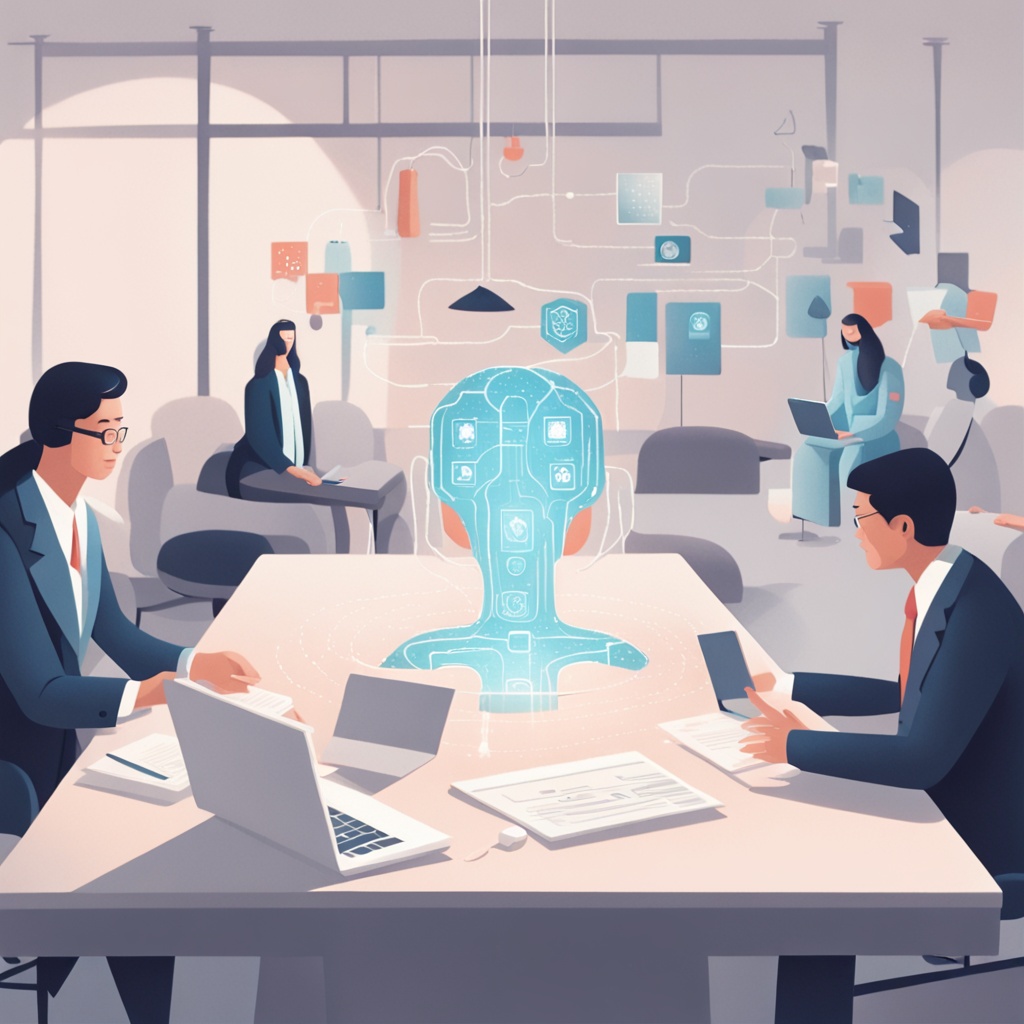
The Changing Role of the CMO in the Age of AI
The marketing landscape is experiencing its most profound transformation since the advent of digital advertising. Artificial intelligence has moved beyond buzzword status to become a fundamental force reshaping how consumers discover brands, how marketers reach audiences, and crucially, how Chief Marketing Officers (CMOs) define their role within organizations. Recent analysis from Sifted, featuring insights from marketing leaders like Naomi Walkland of Motorway and Sarah Kiefer of Supernormal, reveals a compelling picture of the modern CMO as an "AI conductor" who must orchestrate technology while preserving the irreplaceable human elements of marketing.
This evolution represents more than a simple addition of new tools to the marketing toolkit. It signals a fundamental shift in the skills, responsibilities, and strategic thinking required of marketing leadership. The implications extend far beyond individual companies to reshape entire industries and redefine competitive advantage in the digital economy.
The Consumer Behavior Revolution
The most significant driver of CMO role transformation lies in the dramatic shift in consumer behavior patterns. Traditional brand discovery mechanisms are rapidly being displaced by AI-powered alternatives. Where consumers once turned to Instagram, Google searches, or traditional advertising to learn about brands, they increasingly rely on conversational AI platforms like ChatGPT as their primary information source.
This shift represents a fundamental disruption to the marketing funnel that has guided strategy for decades. Research from McKinsey Global Institute indicates that 71% of consumers now use AI-powered tools for product research, with this number projected to reach 85% by 2026. The implications are staggering: traditional advertising impressions may lose their influence as Large Language Models become the primary filter through which consumers process brand information.
Walkland's observation about this phenomenon rings particularly true in sectors where trust and credibility matter most. In automotive markets like Motorway's used car marketplace, consumers historically relied heavily on peer reviews, dealer reputation, and brand advertising. Now, they're asking AI systems to synthesize vast amounts of information and provide recommendations, fundamentally altering how brands must position themselves in the digital ecosystem.
This transformation demands that CMOs reconsider not just their messaging strategy, but their entire approach to brand positioning. Success increasingly depends on ensuring that AI systems have access to accurate, comprehensive brand information and that this information is optimized for AI interpretation rather than human reading patterns.
The Speed Imperative and Strategic Risk
The acceleration of business cycles driven by AI adoption has created what Kiefer describes as a "speed is the only moat" environment. This philosophy reflects the broader venture capital and startup ecosystem's belief that market dominance will be determined quickly, with little room for late entrants to recover ground.
However, this speed-centric approach carries significant strategic risks that warrant careful consideration. Harvard Business Review research on rapid scaling initiatives shows that companies prioritizing speed over strategic depth experience 40% higher failure rates in sustainable growth metrics. The pressure for overnight results can lead CMOs to make tactical decisions that optimize for short-term metrics while undermining long-term brand equity.
The challenge becomes particularly acute in B2B markets, where relationship-building and trust development traditionally require extended timeframes. Companies like Salesforce and HubSpot built their market positions through patient, systematic relationship building over years or decades. The current emphasis on speed may not translate effectively to all market contexts.
Smart CMOs are finding ways to balance speed with strategic depth. This involves identifying areas where AI can accelerate traditional processes without compromising quality, while maintaining patience in areas where relationship-building and trust development cannot be artificially accelerated.
Technical Competency as Core Leadership Skill
Perhaps the most dramatic change in CMO responsibilities involves the expectation of technical competency. Modern marketing leaders are increasingly expected to understand AI capabilities, evaluate technology platforms, and guide technical implementation decisions. This represents a significant departure from traditional marketing leadership, which typically focused on creative strategy, brand management, and customer insights.
The technical requirements extend beyond surface-level familiarity. CMOs must understand the capabilities and limitations of different AI models, evaluate the ROI of various marketing technology platforms, and make informed decisions about data integration and privacy compliance. These skills were traditionally the domain of Chief Technology Officers or specialized marketing technology managers.
Successful CMOs are approaching this challenge through structured upskilling initiatives. Walkland's approach at Motorway, involving dedicated "AI champions" within her team and regular experimentation hackathons, provides a scalable model for organizations facing similar challenges. The Oxford Saïd Business School AI Programme and Google's Generative AI Leader training represent formal educational pathways for marketing leaders seeking technical competency.
However, the technical competency requirement raises important questions about the future of marketing leadership. Organizations risk excluding experienced marketing professionals who lack technical backgrounds but possess deep customer insights and creative capabilities. The most successful approaches likely involve building hybrid teams that combine technical expertise with traditional marketing strengths rather than expecting individual leaders to master all domains.
The Personalization-Scale Paradox
One of AI's most promising applications in marketing involves creating personalized content at unprecedented scale. Platforms like Braze enable marketers to generate individualized campaigns for millions of customers, addressing the fundamental challenge of cutting through information overload in saturated digital channels.
Yet this capability creates its own strategic challenges. As AI-generated content becomes more prevalent, consumers are developing sophisticated detection capabilities and increasingly valuing authentic, human-created content. Research from the Content Marketing Institute shows that 67% of consumers express skepticism toward obviously AI-generated marketing materials, with younger demographics showing particularly strong preferences for authentic brand voices.
The solution requires CMOs to develop nuanced approaches to AI integration. Successful implementations use AI to enhance human creativity rather than replace it entirely. Netflix's recommendation system exemplifies this approach, using AI to analyze viewing patterns while relying on human curators to understand cultural context and emotional resonance.
Motorway's use of custom GPTs to draft content in specific voices represents another sophisticated approach. Rather than generating generic marketing copy, these tools help maintain consistency and efficiency while preserving distinctive brand personality. The key lies in using AI to amplify human insight rather than substitute for it.
Trust Building in an AI-Dominated Landscape
The proliferation of AI-generated content creates unprecedented challenges for trust building, traditionally one of marketing's core functions. Consumers increasingly question the authenticity of online reviews, social media content, and even product images. This skepticism extends to all digital marketing touchpoints, forcing brands to develop new approaches to credibility building.
The response from leading CMOs involves increased emphasis on transparency and human connection. In-person events, executive thought leadership, and behind-the-scenes content become more valuable as counterpoints to AI-generated materials. Patagonia's approach to environmental advocacy, involving real employee stories and documented conservation efforts, provides a model for building authentic connections in an AI-saturated environment.
Regulatory developments will likely accelerate this trend. The European Union's proposed AI transparency requirements and similar legislation under consideration in other jurisdictions will force companies to disclose AI usage in marketing materials. CMOs who proactively address transparency concerns will likely gain competitive advantages as regulatory requirements expand.
The Human Connection Premium
Despite AI's capabilities in efficiency and personalization, both Walkland and Kiefer emphasize the growing importance of human connection in marketing strategy. This observation aligns with broader psychological research showing that human beings have fundamental needs for authentic social connection that cannot be satisfied by AI interactions.
The implications extend beyond warm feelings to measurable business outcomes. Research from Deloitte indicates that brands with strong emotional connections to customers generate 2.3 times more revenue growth than competitors. In an AI-dominated environment, the ability to create genuine human connections becomes a sustainable competitive advantage.
Successful CMOs are investing heavily in experiences that facilitate authentic human interaction. Adobe's annual MAX conference, for example, combines product education with creative inspiration and peer networking, creating value that cannot be replicated through digital channels. These investments require patience and long-term thinking that runs counter to the "speed is everything" mentality prevalent in much AI discussion.
Organizational Change Management
The transformation of marketing organizations to incorporate AI capabilities represents a significant change management challenge that many CMOs underestimate. Beyond technical training, successful AI integration requires cultural shifts, process redesign, and often substantial organizational restructuring.
The most successful approaches involve bottom-up experimentation combined with top-down strategic guidance. Kiefer's description of organic knowledge sharing at Supernormal, where team members discover and share AI applications independently, creates sustainable learning cultures that can adapt to rapidly evolving technology landscapes.
However, this organic approach must be balanced with strategic coordination to avoid fragmentation and ensure consistent brand representation. The most effective CMOs establish clear guidelines and standards while encouraging experimentation within defined parameters.
Strategic Recommendations for Marketing Leaders
Based on current trends and successful implementations, several strategic principles emerge for CMOs navigating AI integration:
- First, develop technical literacy without becoming technologists. CMOs need sufficient understanding to make informed decisions and communicate effectively with technical teams, but should avoid the trap of trying to master every technical detail. Building relationships with technical experts and investing in continuous learning programs provides more sustainable approaches than attempting to become AI experts personally.
- Second, maintain focus on differentiation rather than efficiency alone. While AI excels at optimizing existing processes, sustainable competitive advantage requires distinctive approaches that competitors cannot easily replicate. This often involves combining AI capabilities with unique human insights, proprietary data, or distinctive brand positioning.
- Third, invest in measurement systems that capture both short-term efficiency gains and long-term brand equity impacts. The emphasis on speed and immediate results can obscure important long-term consequences of AI implementation. Sophisticated measurement approaches help CMOs optimize for sustainable success rather than quarterly metrics.
- Fourth, develop crisis communication capabilities for AI-related issues. As AI usage becomes more prevalent, companies will inevitably face questions about algorithmic bias, data usage, or content authenticity. Proactive preparation for these conversations helps maintain trust and credibility when issues arise.
The Future Marketing Organization
Looking ahead, the most successful marketing organizations will likely evolve toward hybrid models that combine AI efficiency with human creativity and connection. This evolution requires CMOs to become organizational architects who design systems and processes rather than simply managing existing functions.
The "AI conductor" metaphor proves particularly apt because orchestral conductors must understand all instruments while mastering none, coordinate complex interactions, and create emotional resonance that transcends technical execution. Similarly, successful CMOs will coordinate AI capabilities, human creativity, and customer insights to create marketing symphonies that achieve both efficiency and emotional impact.
This transformation represents both challenge and opportunity for marketing leadership. CMOs who successfully navigate the transition will find themselves with expanded influence and strategic importance within their organizations. Those who resist or inadequately adapt risk marginalization as AI capabilities mature and competitive pressures intensify.
The ultimate success metric may be the ability to use AI to enhance human connection rather than replace it. In a world where technical capabilities become increasingly commoditized, the brands that maintain authentic human relationships while leveraging AI efficiency will likely achieve the most sustainable success. For CMOs, this means becoming conductors who orchestrate technology in service of fundamentally human objectives.
You can explore additional perspectives on how AI is redefining the role of the CMO by visiting this article on Sifted.