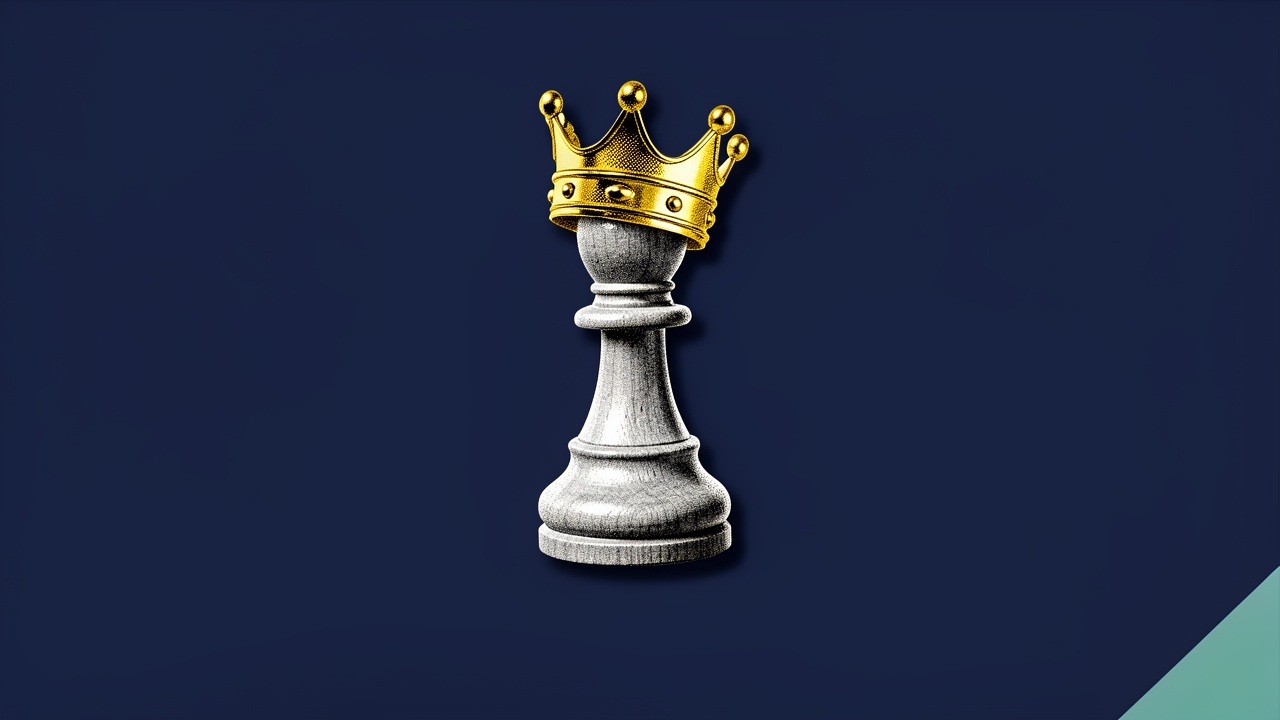
Human Resources: Strategic Leadership Transformation
Human Resources departments across organizations face a transformation unlike any they have experienced before. The shift from administrative support to strategic leadership has occurred with remarkable speed, leaving many HR professionals responsible for decisions that will shape their organizations' futures while lacking the formal training to guide them.
Dr. Diane Hamilton's recent Forbes article highlights this critical gap through a lens that many HR leaders will recognize immediately. The roles now expected of HR include AI governance, workforce design, ethical technology decisions, analytics interpretation, and scenario planning. Each demands judgment capabilities that fall outside traditional HR education and development paths. The challenge is real, urgent, and growing as technology accelerates while educational institutions struggle to keep pace.
The Strategic Elevation of HR
The transformation of HR from support function to strategic partner represents more than a title change or organizational restructuring. This shift fundamentally redefines what HR professionals must know, how they must think, and the scope of their organizational impact.
Hamilton correctly identifies that HR teams are now expected to make choices affecting every corner of their organizations. When HR participates in AI governance conversations, the implications extend beyond hiring algorithms or performance management tools. These decisions establish precedents for how organizations approach automation, bias detection, transparency, and human-machine collaboration across all functions.
Research from Deloitte's 2024 Global Human Capital Trends report supports this observation, finding that 73% of organizations now consider HR a strategic business partner, yet only 38% of HR leaders report feeling adequately prepared for this expanded role. The disconnect between expectation and capability creates risk at precisely the moment organizations need confident, informed decision-making.
The speed of this transformation cannot be overstated. A decade ago, HR discussions centered on talent acquisition, performance reviews, compensation structures, and employee relations. These remain important, but they now represent baseline competencies rather than distinguishing capabilities. Today's HR leaders must navigate questions about algorithmic bias in recruitment tools, ethical implications of employee monitoring technology, workforce architecture for hybrid environments, and data privacy in an era of pervasive analytics.
The Educational Infrastructure Gap
Hamilton identifies a structural problem that extends beyond HR to affect many professions: educational institutions cannot update curricula fast enough to match technological change. Universities typically require years to develop, approve, and implement new programs. Technology companies can pivot their product strategies in months or even weeks.
This mismatch creates a persistent lag between what professionals learn in formal education and what they need to know when they enter leadership roles. For HR specifically, most professionals completed their education when AI governance was not a consideration, workforce design meant headcount planning, and analytics meant running reports rather than interpreting complex patterns to inform strategic decisions.
MIT's Work of the Future Task Force found that occupational skills have a half-life of approximately five years in technology-adjacent fields, meaning half of what someone knows becomes obsolete or less relevant within that timeframe. For HR professionals navigating AI implementation, ethical technology frameworks, and data-driven decision-making, this half-life may be even shorter.
The implications extend beyond HR to affect entire workforces. If HR professionals lack training in these areas, how can they effectively develop learning strategies for employees facing similar challenges? Organizations risk creating a cascade effect where underprepared HR teams struggle to prepare underprepared workforces for roles that demand capabilities no one thought to develop.
Systemic Thinking as the Core Capability
Hamilton's article references Dave Ulrich's perspective on systemic thinking, culture shaping, and strategic clarity as rising competencies for HR. This deserves deeper examination because it identifies what may be the most critical skill gap.
Systemic thinking differs fundamentally from the task-oriented or process-focused thinking that characterized traditional HR work. It requires the ability to trace how a single decision ripples through an organization, affecting culture, capability, risk, behavior, and outcomes in ways that may not become apparent for months or years.
Consider AI governance as an example. An HR leader evaluating an AI-powered recruitment tool must think beyond the immediate question of whether the tool improves hiring efficiency. Systemic thinking demands consideration of how the tool might introduce or perpetuate bias, how it affects candidate experience and employer brand, what skills recruiting teams will need to use it effectively, how it changes the balance between human judgment and algorithmic recommendation, what data privacy implications it creates, and how it establishes precedents for AI adoption in other areas.
This level of analysis requires integrating knowledge from multiple domains including technology, ethics, organizational behavior, data science, legal compliance, and change management. Few HR professionals received training that deliberately developed this integrative capability.
Research from McKinsey's Global Institute on workforce transitions suggests that roles requiring complex problem-solving and systems thinking will grow significantly over the next decade, while routine task-oriented roles decline. HR must model the very transformation it will need to guide throughout organizations.
The Courage Factor in Ethical Decision-Making
Hamilton mentions courage as a necessary component for HR's new responsibilities, particularly regarding AI ethics and experience design. This observation touches on an often-overlooked dimension of the skills gap: technical knowledge alone is insufficient when decisions involve competing values and incomplete information.
Ethical technology decisions rarely present clear right or wrong answers. Instead, they involve tradeoffs between legitimate competing interests: efficiency versus privacy, innovation versus caution, personalization versus fairness, automation versus employment. HR leaders must make recommendations or decisions that will be questioned regardless of which values they prioritize.
The Harvard Business Review's research on ethical decision-making in organizations found that professionals often struggle most not with identifying ethical issues but with acting on their concerns when facing organizational pressure, resource constraints, or implementation complexity. HR professionals navigating AI governance and ethical technology decisions need not just frameworks for analysis but also the confidence and organizational support to raise difficult questions and advocate for considered approaches even when they slow initiatives or add complexity.
Organizations that expect HR to lead ethical technology decisions without providing clear authority, decision-making frameworks, and executive support set their HR teams up for failure. The courage Hamilton references cannot exist in a vacuum; it requires organizational structures that legitimize HR's voice in these conversations and protect professionals who identify risks or recommend caution.
Redefining Workforce Design
Hamilton's observation that workforce design has evolved from headcount planning to encompass capability planning, organizational design, workflow, and work integration deserves expansion. This transformation exemplifies how apparently straightforward HR functions have become significantly more complex.
Traditional workforce planning involved forecasting hiring needs based on growth projections, attrition rates, and seasonal demands. Current workforce design requires HR to think architecturally about how different types of work fit together, which capabilities can be developed internally versus acquired externally, how automation changes skill requirements, which work arrangements enable different types of productivity, and how organizational structures either enable or constrain capability development.
Gartner's research on workforce planning found that organizations using advanced workforce design approaches achieve 25% better business outcomes than those relying on traditional planning methods. However, only 23% of organizations report having the analytical capabilities and planning frameworks to implement these advanced approaches.
This capability gap in workforce design creates cascading challenges. If HR cannot effectively architect the workforce for emerging needs, organizations will struggle to execute strategy regardless of how brilliant that strategy might be. Capability becomes the constraint.
Analytics and the Interpretation Challenge
Hamilton distinguishes between reporting information and interpreting patterns to generate insight. This distinction matters enormously because it identifies where many HR teams get stuck.
Most organizations now have access to substantial workforce data: engagement survey results, performance ratings, turnover statistics, learning completion rates, and increasingly sophisticated data from workplace technologies. HR teams can produce dashboards and reports showing this information. The challenge lies in knowing what the data means and what actions it should inform.
Interpretation requires understanding context, recognizing patterns, questioning assumptions, identifying what might be missing from the data, and connecting workforce patterns to business outcomes. These skills develop through practice and often through apprenticeship with experienced analysts, yet many HR professionals are expected to perform these analyses without having developed the underlying capabilities.
The Society for Human Resource Management found that while 71% of organizations consider people analytics important or very important, only 9% report having HR teams with strong analytical capabilities. This gap between aspiration and capability leaves organizations making significant decisions based on incomplete or misinterpreted data.
Scenario Planning Under Uncertainty
Hamilton identifies scenario planning as particularly challenging for HR professionals accustomed to solving immediate problems. This observation highlights a fundamental shift in what organizations need from HR: less firefighting, more strategic anticipation.
Scenario planning requires imagining multiple plausible futures, identifying signals that indicate which future is emerging, and developing flexible strategies that can adapt as uncertainty resolves. For HR, this might involve developing workforce strategies that remain viable whether remote work continues at current levels, returns to pre-pandemic patterns, or evolves into entirely new arrangements.
The challenge is that scenario planning feels uncomfortable for professionals trained to solve defined problems with clear parameters. Deliberately maintaining strategic optionality and preparing for multiple contradictory futures can feel like failing to commit or lacking conviction. Organizations must help HR teams understand that managing uncertainty through scenario planning represents sophisticated strategic thinking, not indecisiveness.
The Continuous Learning Imperative
Hamilton's strongest practical recommendation centers on making learning continuous rather than episodic. This approach aligns with research on adult learning and skill development but contradicts how many organizations still structure professional development.
Traditional training programs follow a familiar pattern: identify a need, develop or purchase a training program, schedule it for a specific time, deliver it to a group, and measure completion. This approach works reasonably well for stable knowledge domains where what someone learns today will remain relevant for years.
The approach fails for rapidly evolving domains like AI governance, ethical technology, and advanced analytics. By the time a traditional training program is developed, scheduled, and delivered, the specific technologies and practices it addresses may have already evolved. Completion metrics become meaningless when the content is outdated before implementation.
Continuous learning takes a different approach: embedding brief, frequent learning opportunities into workflow, focusing on principles and frameworks rather than specific tools, encouraging questions and exploration, creating space for collaborative sense-making, and treating learning as an ongoing practice rather than a periodic event.
Research from LinkedIn Learning found that employees who engage in continuous learning through brief, frequent sessions demonstrate 47% better retention than those who rely on traditional training programs. For HR professionals navigating rapidly changing domains, this retention difference becomes critical.
Josh Bersin's research on corporate learning provides additional support for this approach. Organizations that have successfully transformed learning from episodic training to continuous development report higher employee engagement, better adaptation to change, and stronger business outcomes. However, making this shift requires rethinking learning infrastructure, measurement approaches, and cultural norms around professional development.
What Organizations Must Do Differently
The skills gap Hamilton identifies cannot be solved by HR alone. Organizations must recognize their role in creating conditions for HR teams to develop the capabilities their expanded strategic responsibilities require.
First, organizations must provide time and space for learning. HR professionals cannot develop systemic thinking, analytical interpretation skills, or ethical decision-making frameworks while responding to constant operational demands. Organizations that expect strategic contribution from HR without reducing operational burdens or providing additional capacity set impossible expectations.
Second, organizations need to clarify HR's authority and decision-making role in strategic areas like AI governance. Asking HR to lead conversations without granting commensurate authority creates ambiguity that prevents effective leadership. Clear governance structures, decision rights, and escalation paths enable HR professionals to step confidently into strategic roles.
Third, organizations should invest in learning infrastructure that supports continuous development. This includes micro-learning platforms, communities of practice, access to expert consultation, peer learning networks, and time allocated specifically for professional development. The investment required is modest compared to the risk of HR teams making consequential decisions without adequate preparation.
Fourth, organizations must foster cultures where questioning and exploration are valued over false certainty. HR professionals navigating unfamiliar domains like AI governance will need to ask basic questions, admit uncertainty, and request time to consider implications. Organizations that punish uncertainty or reward confident answers regardless of their validity discourage the careful thinking these decisions require.
The Broader Workforce Development Challenge
While Hamilton's article focuses on HR, the challenges she identifies extend throughout organizations. If HR struggles to keep pace with skills evolution, so do employees in virtually every function. The question becomes whether organizations will recognize this as a systemic challenge requiring new approaches to capability development or continue treating it as an individual professional development issue.
The World Economic Forum's Future of Jobs Report estimates that 50% of all employees will need reskilling by 2025 as adoption of technology increases. This reskilling must happen while people continue performing their current roles, creating the same tension HR faces between operational demands and learning needs.
Organizations that successfully navigate this transition will likely be those that reconceptualize learning as integral to work rather than separate from it. This requires different incentive structures, different performance expectations, different resource allocation, and different cultural norms.
Moving Forward
The transformation Hamilton describes represents both challenge and opportunity for HR. The elevation to strategic partner brings greater organizational influence and impact. However, influence without capability creates risk for both HR professionals and their organizations.
The path forward requires acknowledging the skills gap honestly, investing in continuous learning infrastructure, clarifying decision rights and governance structures, and creating organizational cultures that support thoughtful decision-making under uncertainty. Organizations that make these investments position their HR teams to guide technology adoption, workforce transformation, and cultural evolution effectively.
Those that expect strategic contribution without providing strategic support will likely discover that their HR teams struggle with decisions that require capabilities no one developed. The cost of that gap will be measured not just in HR effectiveness but in organizational outcomes shaped by unprepared decision-making at critical moments.
The velocity of change Hamilton describes will likely accelerate rather than moderate. AI capabilities continue advancing rapidly. Work arrangements continue evolving. Workforce expectations continue shifting. The question is not whether HR will need these expanded capabilities but whether organizations will invest in developing them before the cost of the gap becomes evident through strategic missteps that could have been avoided.
HR professionals did not create this situation, but they must navigate it. Organizations that recognize their responsibility to provide the training, tools, authority, and support their HR teams need will gain significant competitive advantage through better workforce decisions during a period of substantial transformation.