Lego’s Leadership Playground: Niels B. Christiansen's Radical Approach
In an era where corporate culture often prioritizes rigid efficiency over human creativity, Lego's CEO Niels B Christiansen offers a radical reimagining of leadership through the lens of play. His approach doesn't just challenge traditional management paradigms—it fundamentally reconstructs them.
Adapting in the Digital Age
The digital age demands unprecedented adaptability, and Christiansen's leadership philosophy emerges as a compelling blueprint for organizations seeking to remain innovative and resilient. By embracing play as a core strategic principle, Lego has transformed what could be a nostalgic toy company into a cutting-edge innovation platform.
The Power of Play in Corporate Culture
Central to Christiansen's approach is the recognition that play is not a distraction from serious work, but a sophisticated cognitive tool. Research from organizational psychology supports this perspective, showing that playful environments boost creativity, reduce stress, and enhance problem-solving capabilities. A 2019 study in the Journal of Business and Psychology found that organizations encouraging playful interactions demonstrated 35% higher innovation rates compared to more traditional workplace cultures.
Lego's "Leadership Playground" Model
Lego's "leadership playground" model distills children's natural learning behaviors into leadership principles: focus, curiosity, and bravery. This approach directly counters the conventional wisdom that workplace effectiveness requires constant seriousness. Instead, Christiansen argues that the most dynamic learning occurs when individuals feel psychologically safe to experiment, fail, and reimagine possibilities.
Concrete Practices Demonstrating Commitment
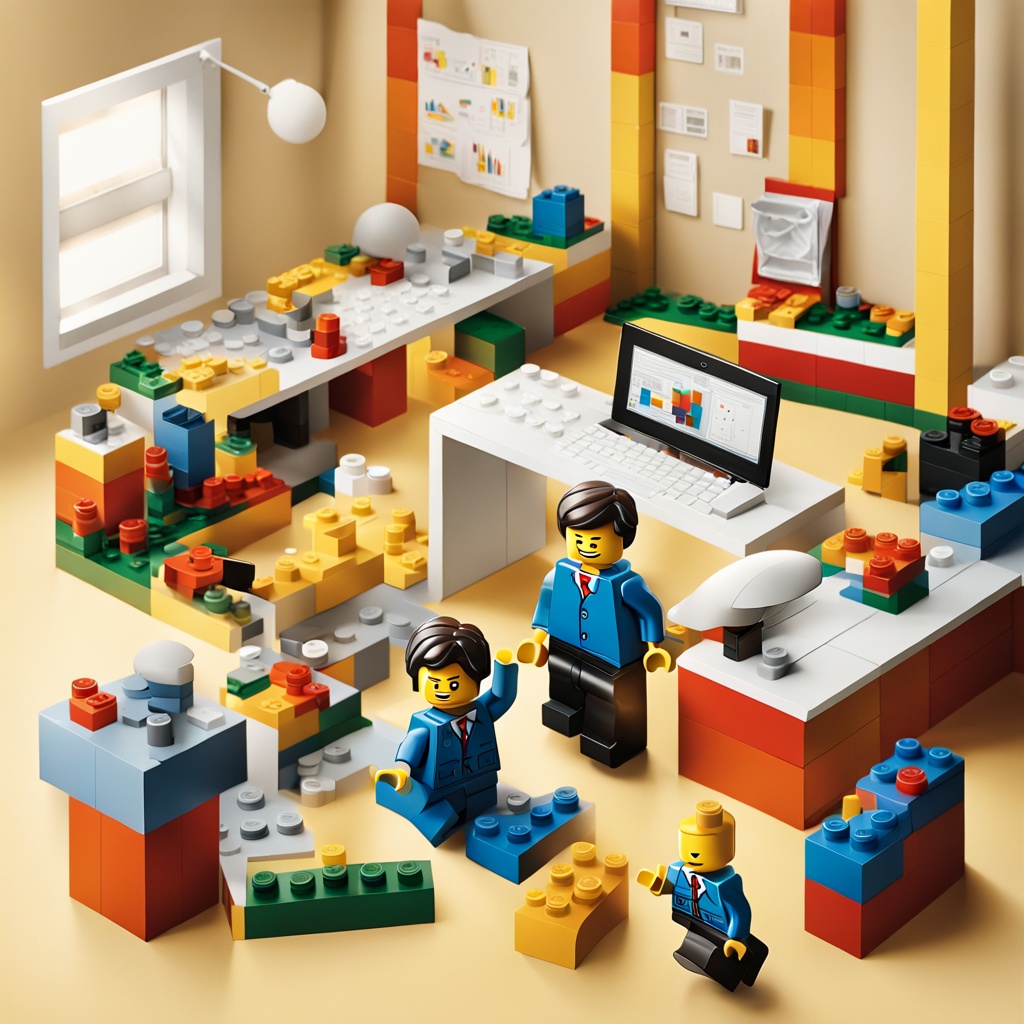
The company's commitment to this philosophy is not merely rhetorical. Concrete practices like allowing employees two fully paid "play days" annually and embedding Lego bricks in boardroom meetings demonstrate a profound organizational commitment to transforming workplace culture. This isn't performative—it's a strategic investment in human potential.
Addressing Modern Business Challenges
Christiansen's approach also addresses critical challenges in the contemporary business landscape. As digital technologies rapidly transform industries, traditional hierarchical structures become increasingly obsolete. Play introduces flexibility, encourages cross-functional thinking, and creates environments where innovation can spontaneously emerge.
Hybrid Play and Beyond
The "hybrid play" concept Lego is developing—seamlessly integrating physical and digital experiences—offers insights beyond the toy industry. In an increasingly complex global economy, organizations must become adept at navigating multiple experiential domains. Lego's model suggests that play can be the connective tissue bridging seemingly disparate technological and human experiences.
Environmental Considerations
Environmental considerations also factor into Lego's progressive strategy. While the company continues wrestling with plastic sustainability challenges, Christiansen's approach demonstrates how innovative thinking can transform potential limitations into opportunities for reimagining product design and organizational responsibility.
Tapping into the "Kidult" Trend
The "kidult" trend Lego has successfully tapped into further validates their approach. By recognizing that play transcends age boundaries, the company has expanded its market while challenging reductive assumptions about adult learning and engagement.
A New Philosophical Stance on Leadership
From a leadership perspective, Christiansen's model represents more than a novel management technique—it's a philosophical stance about human potential. By treating play as a serious organizational capability, Lego challenges us to reconsider fundamental assumptions about work, creativity, and human development.
Navigating Uncertainty and Fostering Innovation
For business leaders and organizations seeking to remain competitive in an increasingly complex global landscape, Lego's approach offers a provocative and promising framework. Play is not a luxury or a distraction—it is a sophisticated strategic tool for navigating uncertainty, fostering innovation, and unlocking human potential.
The Future of Leadership
The future of leadership, Christiansen suggests, will belong to those who can most effectively balance structured strategic thinking with the boundless creativity inherent in play. In a world of increasing algorithmic precision, human creativity—nurtured through playful exploration—remains our most irreplaceable competitive advantage.