How Remote Working Husbands Are Reshaping Career Opportunities for Professional Women
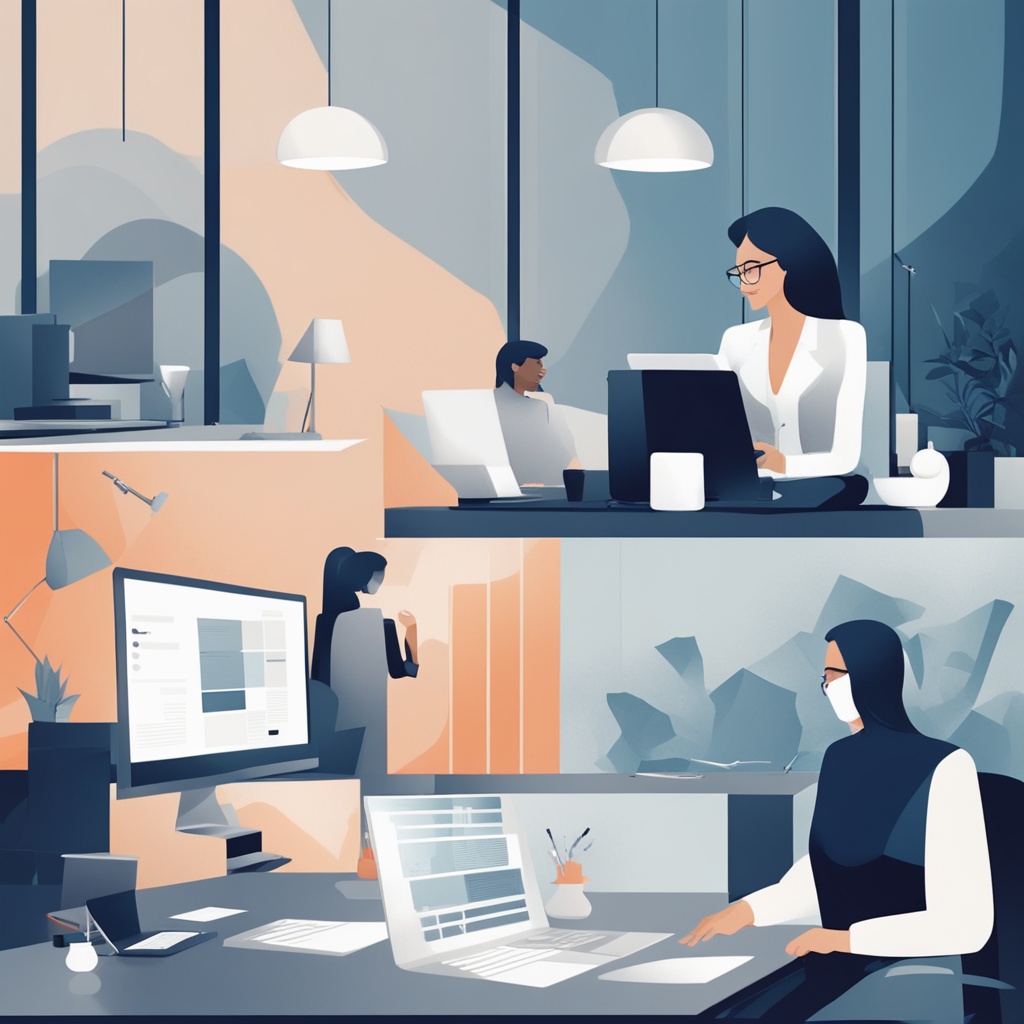
A quiet revolution is taking place in American households. Across the country, particularly among well-educated professional couples, wives are heading out to offices, hospitals, and courtrooms while their husbands remain at home—not as stay-at-home dads, but as remote workers. This trend, highlighted in a recent article from The Economist titled "The Rise of the Remote Husband," signals a potentially significant shift in how couples navigate the competing demands of dual careers.
The New Reality of Remote Working Spouses
The Economist article identifies a pattern emerging among educated professionals: women pursuing careers that demand physical presence—like medicine, law, and academia—while their husbands work remotely in fields like technology and engineering. This isn't a revival of 1950s household dynamics with reversed gender roles; the men aren't primarily handling domestic responsibilities. They're fully employed professionals who happen to work from home.
According to a McKinsey survey cited in the article, 38% of working men have the option to work remotely full-time, compared with just 30% of women. Additionally, about half of women report being unable to work remotely at all, compared with 39% of men. This disparity reflects the continuing gender segregation in the job market, where men dominate in technology and engineering fields that more readily accommodate remote work.
At first glance, this might seem like yet another gender inequality. However, The Economist suggests a more nuanced interpretation: the geographic flexibility of either spouse can free the other to pursue career opportunities regardless of location. For dual-career couples, this represents a potential solution to the "two-body problem" that has traditionally forced compromises, typically with women's careers taking a back seat.
Beyond Individual Couples: Broader Implications
This trend raises important questions about how remote work might reshape gender dynamics in the workplace and at home. While The Economist primarily focuses on how remote-working husbands benefit their wives' careers, the implications extend much further.
History shows that women's labor force participation has typically been highest when work can be performed from home, according to Nobel laureate Claudia Goldin, cited in the article. Goldin's research also indicates that gender wage gaps are narrowest in fields where flexible working is standard. But the article only briefly touches on these broader patterns without exploring their full significance.
Dr. Sarah Damaske, a sociology professor at Penn State University and author of "The Tolls of Uncertainty: How Privilege and the Guilt Gap Shape Unemployment in America," offers a complementary perspective: "Remote work doesn't just benefit the remote worker. When men work remotely, they're more likely to contribute to household labor and childcare, even if that's not their primary role. This reduces the 'second shift' burden on women that has been well-documented since the 1980s."
Damaske's research suggests that even when remote-working husbands aren't primarily responsible for domestic duties, their presence at home often leads to more equitable division of household labor—a crucial factor in women's career advancement.
The Geography of Opportunity
One of the most compelling aspects of this trend is how it addresses the geographical constraints that have historically limited women's career opportunities. Professional women in location-specific fields like medicine, law, and academia have often had to make difficult choices when their spouse's career demanded relocation.
The examples in The Economist article illustrate this new dynamic: a couple in Costa Mesa, California, where she works toward becoming a law firm partner while he works remotely for a Bay Area tech startup; a Harvard Law School student whose husband codes from their Cambridge apartment; an obstetrician married to a remote tech worker; an Ivy League academic whose husband works for a crypto company.
These scenarios represent a significant departure from traditional patterns where women's careers were more likely to be sacrificed for their husbands' career advancement. As Joan C. Williams, Distinguished Professor at the University of California, Hastings College of the Law, noted in her research on the "ideal worker" norm, "The ability to relocate has long been a requirement for advancement in many high-status careers—a requirement that disproportionately disadvantages women, who are more likely to be part of a dual-career couple."
The remote husband trend potentially dismantles this barrier, giving professional women unprecedented geographic freedom.
Not a Complete Solution
Despite its advantages, this arrangement is not a panacea for gender equality in the workplace. Several limitations deserve consideration:
- Class and Occupational Limitations: The trend appears largely confined to highly educated, professional couples. For middle and working-class families, or those in service industries, retail, or manufacturing, remote work remains uncommon for both partners.
- Childcare Gaps: The Economist article barely addresses childcare responsibilities. While remote-working husbands might have more flexibility, the article doesn't indicate they're taking on primary childcare duties. Without explicit redistribution of these responsibilities, women may still bear the double burden of professional and domestic work.
- Professional Segregation: The trend builds on, rather than challenges, occupational gender segregation. Men continue to dominate in tech and engineering while women increasingly enter medicine and law—fields with different compensation structures and career trajectories.
- Reinforcement of Traditional Patterns: There's a risk that remote husbands could fall into traditional gender patterns despite their physical presence at home. A 2023 study published in Gender & Society found that during the pandemic, men working from home often created "masculine spaces" within the home that reinforced gender segregation of domestic space rather than challenging it.
A research team led by Dr. Melissa Milkie at the University of Toronto found that "mere presence in the home doesn't automatically translate to greater domestic participation. Cultural expectations about gender roles remain powerful even when spatial arrangements change."
Long-term Prospects
Whether this trend represents a temporary adaptation or a lasting shift remains unclear. The pandemic accelerated remote work adoption, but many companies are now pushing for return-to-office policies. The sustainability of these arrangements depends partly on how remote work evolves in male-dominated industries.
Dr. Kathleen Gerson, professor of sociology at New York University and author of "The Unfinished Revolution: Coming of Age in a New Era of Gender, Work, and Family," suggests that these arrangements might be most beneficial during specific life stages: "For couples with young children or aging parents, having one partner work remotely can provide vital flexibility. But these arrangements may shift over the life course as caregiving needs change."
The legal and medical professions are also evolving, with telemedicine and virtual court appearances becoming more common. This could eventually reduce the location-specific nature of these traditionally female-heavy professions, potentially changing the dynamics described in the article.
Beyond Geographic Liberation
The most promising aspect of this trend might not be the specific arrangement of remote husbands and commuting wives, but the increased flexibility it represents for couples to design work arrangements that support both careers.
Research by sociologist Shelley Correll, director of Stanford's VMware Women's Leadership Innovation Lab, indicates that workplace flexibility benefits all employees but particularly helps reduce gender inequality when implemented thoughtfully. "The key," Correll writes, "is that flexibility must be normalized for all workers, not just seen as an accommodation for mothers."
The remote husband trend suggests that some couples are finding individualized solutions to structural problems in how work and family responsibilities are organized. However, lasting change will require institutional support through policies like paid family leave, affordable childcare, and workplace cultures that value results over presence.
Conclusion
The rise of the remote husband represents a potentially significant shift in how dual-career couples navigate competing professional demands. By leveraging the geographic flexibility that remote work provides, these arrangements may help dismantle one of the persistent barriers to women's career advancement—geographic mobility.
However, this trend does not address all aspects of gender inequality in the workplace or at home. It builds on rather than challenges occupational segregation by gender, and it remains largely available only to privileged professional couples. Without conscious effort to redistribute domestic responsibilities, remote-working husbands may perpetuate rather than disrupt traditional gender roles despite their physical presence at home.
Nonetheless, these arrangements offer a glimpse of how technological change can create opportunities for more egalitarian partnerships. As remote work becomes more established and as more couples experiment with alternative arrangements, we may see further evolution in gender dynamics at work and at home.
The most promising outcome would be not just remote husbands supporting their wives' careers, but a broader reconceptualization of work that allows all people—regardless of gender—to build fulfilling careers while maintaining meaningful personal and family lives. That would truly represent a revolution in how we organize work and family.