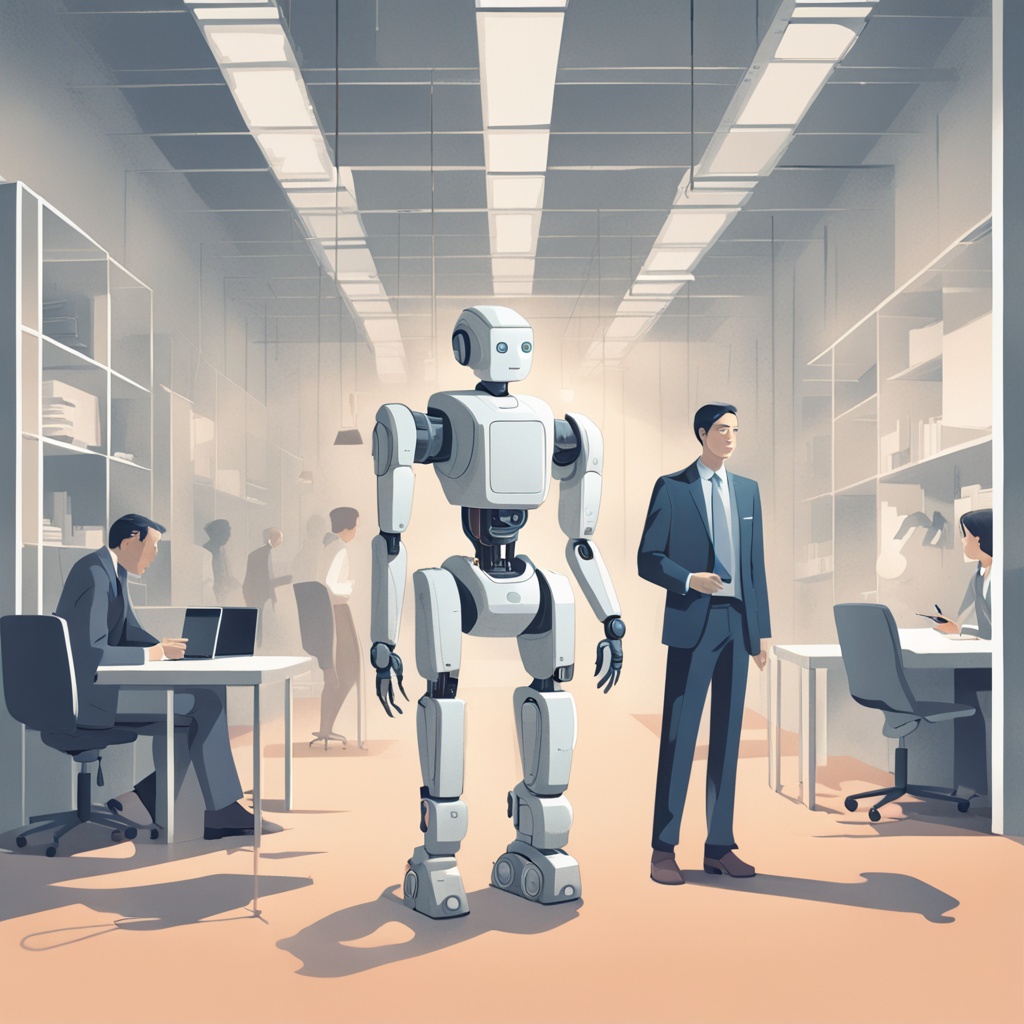
The Integration of Robots in Public Spaces: Current Status and Future Prospects
The deployment of robots in public spaces represents a significant shift in human-machine interaction, but current results suggest we're still in a transitional phase. According to Isabelle Bousquette’s Wall Street Journal article, robots are moving beyond their traditional industrial confines into retail stores, museums, and other public venues. However, this transition isn’t without its challenges.
Current Limitations and Future Potential
The main argument centers on the current limitations and future potential of public-facing robots. While venture capital investment in robotics has increased to $12.8 billion by mid-December 2024, up from $11.6 billion in 2023, the technology still faces significant hurdles in basic tasks that humans find simple.
David Pinn, CEO of Brain Corp, highlights a fundamental challenge: robots struggle with tasks that humans perform effortlessly. Even basic actions like picking up and moving objects present significant technical challenges. This limitation underscores the gap between human adaptability and current robotic capabilities.
At Houston Methodist, robots designed for various tasks frequently encountered problems with navigation and obstacle avoidance. These real-world challenges demonstrate that despite technological advances, robots still lack the intuitive understanding of space and context that humans possess.
The Promise of Generative AI Technology
The integration of generative AI technology offers potential solutions to these limitations. Marc Segura from ABB suggests that GenAI could enhance robots’ ability to plan, adapt, and understand their environment. This technological advancement could bridge the gap between programmed responses and adaptive behavior.
Research from the International Federation of Robotics supports this perspective, indicating that service robot installations increased by 37% in 2023, suggesting growing market confidence despite current limitations. However, a study from MIT’s Computer Science and Artificial Intelligence Laboratory cautions that human-robot interaction in public spaces requires significant advancement in social awareness and contextual understanding.
Challenges and Opportunities in the Hospitality Sector
The hospitality sector presents particularly interesting challenges and opportunities. Will Jackson of Engineered Arts emphasizes the importance of natural interaction in human-robot engagement. While their robots can handle one-on-one conversations, they struggle with group interactions - a limitation that highlights the complexity of social dynamics in robotic systems.
Financial Implications and Public Perception
The financial implications of this technological transition are significant. PepsiCo’s European division plans to increase its robot deployment ten-fold over five years, with a budget increase to $50 million. This investment signals industry confidence in the technology’s potential, despite current limitations.
However, the success of robots in public spaces isn’t solely dependent on technical capabilities. Public acceptance and trust play crucial roles. A recent Pew Research study found that while 65% of Americans see potential benefits in increased automation, 67% express concerns about the loss of human interaction in public spaces.
Conclusion: A Turning Point in 2025?
The future of public-facing robots appears to hinge on several factors. First, the continued development of generative AI could enhance robots’ ability to understand and respond to complex environments. Second, improvements in physical capabilities and dexterity will be crucial for practical applications. Finally, the integration of these technologies must address public concerns about safety and social impact.
The year 2025 could indeed mark a turning point, as suggested by industry experts. The convergence of improved AI capabilities, increased investment, and growing public familiarity with robotic systems may create conditions for more successful deployments.
However, success will require careful consideration of both technical and social factors. Robots must not only perform their assigned tasks efficiently but also integrate seamlessly into human social spaces. This balance between functionality and social acceptance will likely determine the long-term success of public-facing robots.
As we approach this potential turning point, it’s clear that the future of public-facing robots will be determined not just by technological advancement, but by our ability to create systems that meaningfully enhance human experiences while respecting social norms and expectations. The mixed results we see today are not merely technical limitations, but indicators of the complex challenges involved in creating truly effective human-robot interactions in public spaces.